
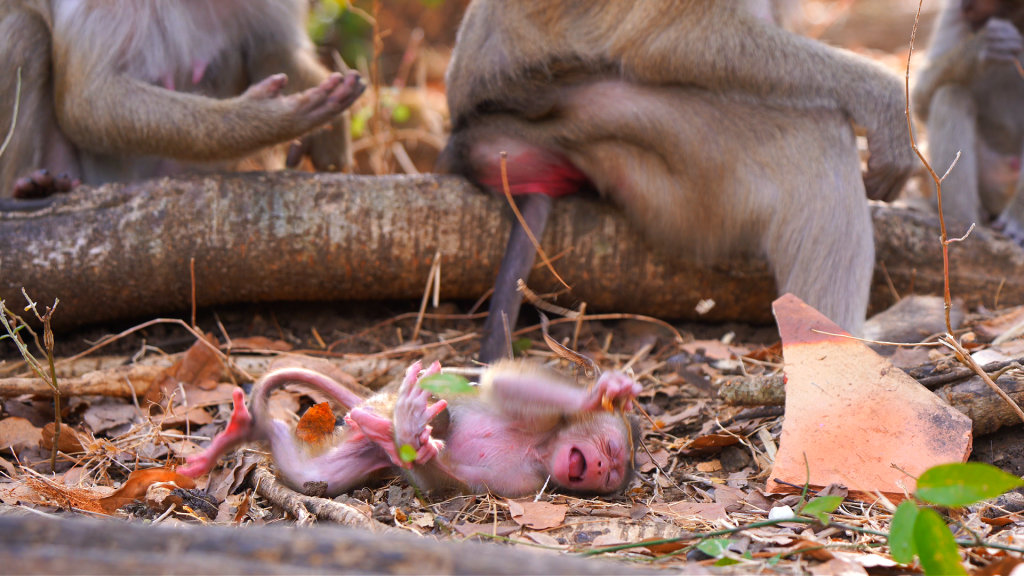
Understanding Why Mother Monkeys Push Their Babies Away
In the wild, monkey behavior can sometimes look emotional or even confusing to human viewers. One of the most misunderstood behaviors is when a mother monkey appears to push her baby away or refuse to hold them constantly.
In your observation of Mama Stephanie and Baby Steely, this behavior may look concerning at first. However, wildlife science shows that this is actually a natural and important part of monkey development.
It Is Not Rejection – It Is Teaching Independence
Mother monkeys do not raise their babies the same way humans do. In primate behavior, mothers slowly reduce physical contact as the baby grows.
This is called gradual independence training.
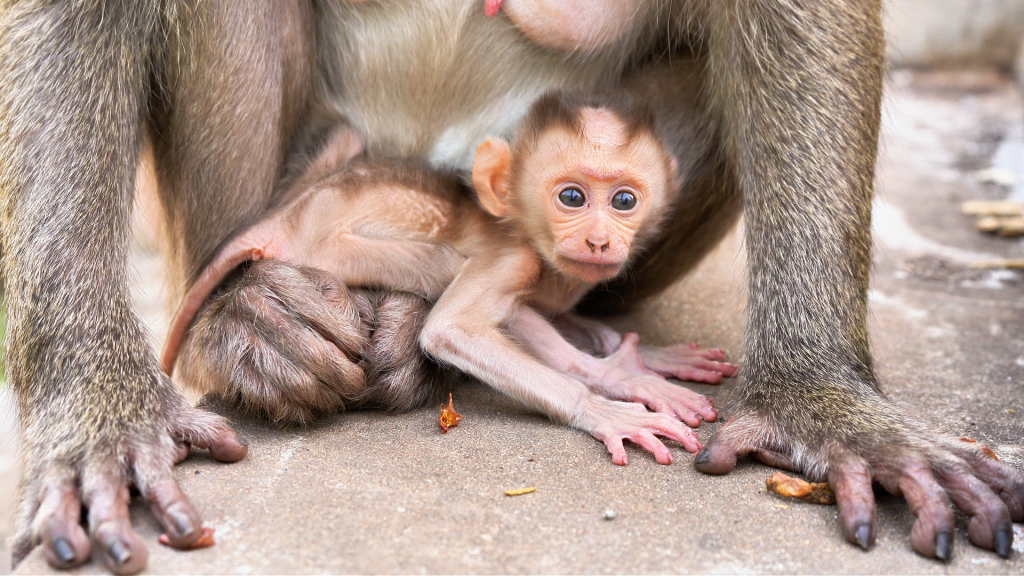
For example:
- A newborn stays fully attached to the mother
- After a few weeks, the mother starts encouraging movement
- The baby is gently pushed or encouraged to climb and explore
In the case of Baby Steely, even if Mama Stephanie appears strict or distant, she is actually helping Steely build survival skills.
Why This Behavior Is Important for Survival
In wild environments like Phnom Pros Phnom Srey, baby monkeys must learn quickly.
If a mother always carries her baby:
- The baby becomes too dependent
- It cannot escape danger
- It cannot learn food searching skills
So mothers naturally encourage:
- Climbing trees
- Exploring nearby branches
- Social interaction with other monkeys
This behavior increases long-term survival chances.
Emotional Sounds Like Crying Are Normal Communication
When Baby Steely appears to cry or resist, it is usually:
- A request for comfort
- A reaction to separation
- A normal developmental stage
But important fact:
👉 In monkey society, crying does not mean harm
👉 It is communication and learning behavior
Mama Stephanie responds based on balance — not emotion like humans.
Real Observation – Mama Stephanie & Baby Steely
- Mama Stephanie sometimes encourages Steely to move away
- Baby Steely shows hesitation but remains safe
- There is continuous monitoring and protection
This is a classic example of controlled parenting in primates
Scientific Explanation (Wildlife Research Insight)
Primatology studies show:
- Macaque mothers reduce carrying time after early infancy
- Encouragement of independence starts very early
- Social learning is more important than physical comfort
This ensures strong adult monkeys in the troop.
Conclusion
What looks like “pushing away” is actually:
✔ Teaching survival
✔ Building independence
✔ Preparing for troop life
Mama Stephanie is not rejecting Baby Steely — she is guiding her into becoming a strong young monkey.